The real bus fare is a day, and the Journal has priced it
The bus to Calico Desert costs 500g, and nobody has ever cared, because the ticket was never the price. Every earlier audit in this paper priced tiles, machines, and actions; this one prices the master unit they all borrow against: a day of the farmer’s life, at every stage of the game, spent every possible way.
- A day has two incomes, and only one is a decision. Passive income from crops, machines, animals, and ponds pays the same whether the farmer fishes, dives, or faints at 2 a.m. The only question a morning poses is which active block to stack on top.
- The active table is lopsided at every stage. Fishing owns the early game at about 1,800g a day; Skull Cavern owns everything after the bus, from 12,000 to 75,000g a day. Nothing else is ever optimal for gold again.
- The highest wage in the game is paid by the farmer’s own shed. Loading kegs and jars out-earns any dive per minute of labor, but only for about half an hour, which makes it the mandatory first claim on every day.
- The calendar prices some days for you. The Egg Festival, the Night Market, and the Fair carry one-off returns that beat any grind available at their stage.
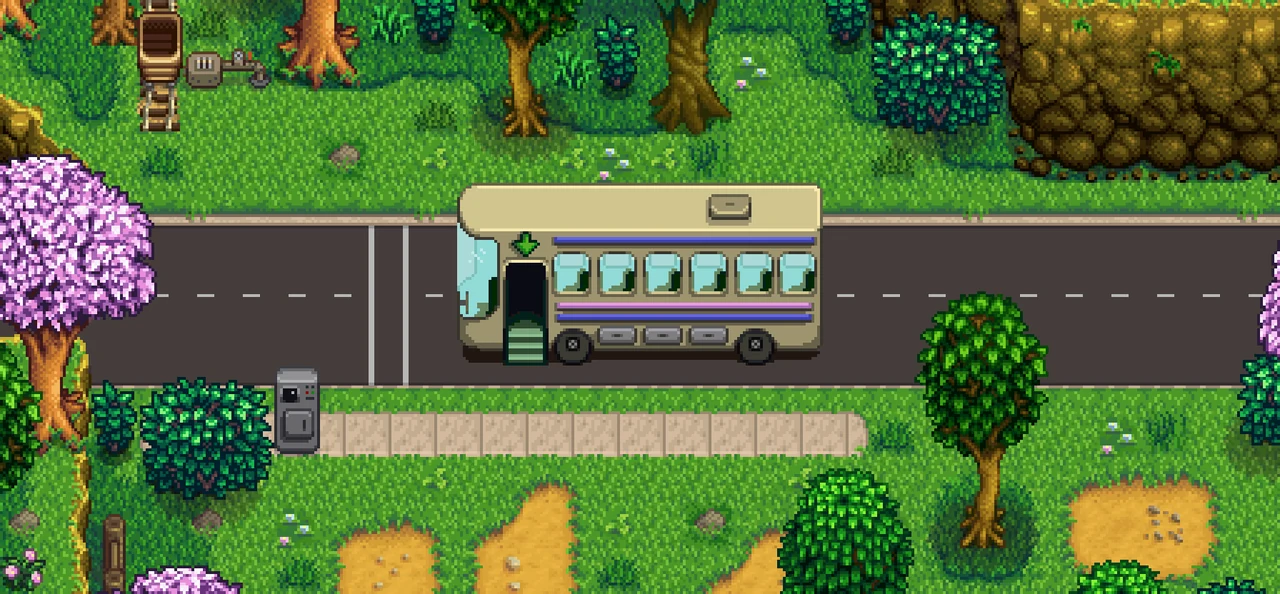
CALICO DESERT – The fare to the desert is posted at the bus stop, and in the Journal’s experience no farmer has ever hesitated over it. That indifference is correct, and the reason it is correct is the subject of this report. The price of going anywhere in the Valley is the day the trip consumes, the one resource the game refuses to sell more of. This paper has spent its run pricing things in tile-days, machine-days, and player actions; each of those units silently borrows against the day. The desk therefore set out to answer the question underneath all of them: what is a day worth, at each stage of the game, spent each possible way?
§1Two incomes per day
Add up where gold comes from on a developed farm and almost none of it is earned by hand. It accrues in machines and soil while the farmer does something else. The desk accordingly splits every day in two. The passive floor is income that arrives because infrastructure exists: sprinkled crops, kegs, jars, barns with auto-grabbers, fish ponds. It is location-independent, paying identically on a dive day, a festival day, and a day spent fishing trash out of the sewer. The active block is the hands-on time from 6 a.m. to 2 a.m., and it is the only thing a decision can change. Its value is marginal: what this use of the hours adds beyond the floor.
Two corollaries do most of the work. First, no activity is credited with income that would have arrived anyway. A “farming day” that collects 40,000g of keg wine earned almost none of it; the wine was earned by an earlier version of the farmer, over 6.25 machine-days. Second, overhead comes off the top. Watering before sprinklers, petting, and reloading machines are not activities; they are rent paid before the day starts. Read this way, the game’s whole technology tree (sprinklers, auto-petters, auto-grabbers, the Return Scepter) is a machine for shrinking overhead until the active block is the entire day.
Marginal gold per active day, beyond the passive floor · central estimates by stage · SDV 1.6
§2The floor rises until the farm out-earns the farmer
The passive floor’s growth is the real plot of the game. In the early stage, Year 1 spring and summer, hand-watered crops and a few chests produce 200–600g a day, about 20% of total income. In the middle stage, Year 1 fall through Year 2 spring, sprinklers, the first kegs and jars, a barn, and one or two ponds lift it to 3,000–8,000g, about half. By Year 2 and beyond, keg sheds, a cellar, a greenhouse, a pig barn, and a pond row produce 30,000–90,000g a day, roughly 75 to 90% of everything the farm earns. The marginal value of playing a day well falls from the whole budget to a bonus, which explains why late-game advice argues so much: at a 90% passive share, almost any active choice is survivable. Survivable is not optimal, however, and the active table stays lopsided to the end.
Passive floor as a share of total income, by stage · SDV 1.6
§3The active league, stage by stage
Early game. Before the bus, with tools and skills low, fishing wins Year 1 spring, and it is not close: about 45 casts on the river or ocean pay 1,000–2,500g a day while the crops are still parsnips, and they buy fishing experience, the skill that scales. The mines pay 800–1,500g and look worse than they are, because the shipping bin misprices ore: five gold bars are a Crystalarium, and a Crystalarium is 195g a day forever. Clearing and planting beyond the watered plot adds about 500g at the margin and raises the future floor, and a foraging circuit pays 400–1,000g while feeding the Community Center bundles. Early days convert into infrastructure at better rates than into gold.
Mid game. Once the bus is repaired and professions are chosen, Skull Cavern without staircases, on a day of decent luck, pays 8,000–16,000g; iridium starts here, and bombs are mandatory. Angler fishing in better waters pays 3,000–6,000g, the same as a Night Market submarine evening in Winter 15–17, which stacks on a normal day’s afternoon. Regular mines and quarry sweeps fall to 1,500–2,500g, worth it only for specific materials, and Botanist foraging to 1,000–2,000g.
Late game. With staircases, buffs, and the Return Scepter, a lucky deep dive of fifty or more staircases with Spicy Eel and bombs pays 25,000–75,000g. An ordinary Skull Cavern day pays 15,000–25,000g, and on unlucky days endgame fishing with stacked buffs, at 6,000–10,000g, is the best fallback. A Ginger Island day in the walnut phase pays in capital rather than gold, and anything else, combat farming, panning, and trash cans included, pays under 5,000g. The pattern across all three tables is that one activity per stage pays double its runner-up, so the day-planning problem is not a portfolio. It is a default with exceptions: fishing until the bus, Skull Cavern after it, and three named exceptions, weather, luck, and the calendar.
§4The highest wage in the game is paid by the shed
Loading a keg takes about five seconds and adds, for pumpkin juice, 656g of value over the following 3.75 days, which the research paper states as roughly 130g per second of labor. Jars run similarly, and aging lava eel roe, the champion jar job in this paper’s fish-pond audit, pays better still. No dive, fishing trip, or festival approaches that rate. What processing lacks is volume: even a 200-keg shed is loaded in under half an hour, and then the wage evaporates until the machines finish. The desk notes one inconsistency in the source rather than resolving it: the paper’s summary verdict puts processing labor at 100 to 400 gold per minute, “ten times any dive’s rate,” while its own keg arithmetic of roughly 130g per second works out to several thousand gold per minute. The paper does not explain the gap between the two, and the desk reports both as given. On either figure the conclusion holds: no other labor in the Valley is paid at this rate.
Processing is therefore not an activity competing for the day; it is a tax collected in reverse, 15 to 40 minutes every morning worth more than most of the rest of the day combined. The practical rule is machines first, always. A late-game farm that skips one keg cycle to extend a dive by half an hour has traded roughly 100,000g of weekly throughput for about 1,500g of marginal mining. Nothing else in this report’s tables can make a mistake that expensive that fast.
§5The luck gate and the calendar
Skull Cavern yield is luck-elastic: ladders, double ore, and treasure floors all read daily luck, while fishing and processing are nearly luck-blind. The rule costs nothing to follow. Check the Fortune Teller at 6 a.m., dive on good days, and fish or restock on bad ones; the desk’s companion report on the luck economy prices that television check in full. The calendar, meanwhile, prices certain days for the farmer. The Egg Festival on Spring 13 sells strawberry seeds at 100g, plantable on the 14th, the best return on gold in Year 1. The Stardew Valley Fair on Fall 16 trades a grange display for a Stardrop at 2,000 tokens, a permanent +34 energy and the only permanent stat purchase on the calendar. The Night Market offers submarine fishing, a free painting, and the coal boat; the 1.6 Desert Festival trades Calico Eggs for vendor stock and skips the bus fare; the Feast of the Winter Star is a social-capital day; and a Green Rain day in summer covers the farm in free hardwood, fiber, and moss, so the correct response is to drop everything and chop. Festival mornings still run the farm, machines first, but the afternoon comparison is unfair: in Year 1 the right play at the Egg Festival is to arrive rich and leave broke.
§6The day template
Every stage shares one skeleton. In the morning the farmer services the floor (machines, animals, collections), because it is the best-paid half hour that will ever be offered. Then the day is read: a calendar event beats luck, and luck decides between the stage’s default, fishing early and diving late, and its rain or bad-luck fallback of fishing, restocking, or bundle work. In the evening the machines are reloaded before bed so the floor works the night shift, and the last hour before 2 a.m. is spent somewhere that does not risk the 1,000g faint. The series’ accounting rule is now complete. Tiles are priced in tile-days, machines in machine-days, labor in actions, and all three clear against the day. An activity is worth doing when it beats Figure 20’s bar for the farmer’s stage, and that bar, not the 500g ticket, is the bus fare.
K1 · The passive floor by stage
| Stage | Typical infrastructure | Passive gold/day | Share of total income |
|---|---|---|---|
| Early (Y1 Spring–Summer) | Hand-watered crops, a few chests | 200–600 | ~20% |
| Mid (Y1 Fall–Y2 Spring) | Sprinklers, first kegs/jars, barn, 1–2 ponds | 3,000–8,000 | ~50% |
| Late (Y2+) | Keg sheds, cellar, greenhouse, pig barn, pond row | 30,000–90,000 | ~75–90% |
K2 · The active league, three stages
| Stage | Active day | Gold per day | Notes |
|---|---|---|---|
| Early | Fishing (river/ocean, ~45 casts) | 1,000–2,500 | Fishing XP, the skill that scales |
| Early | Mines (floors 1–80) | 800–1,500 | Ore and geodes: capital, not just gold |
| Early | Clearing and planting beyond the watered plot | ~500 marginal | Future passive floor |
| Early | Foraging circuit (+ salmonberry week spikes) | 400–1,000 | Community Center bundles |
| Mid | Skull Cavern, no staircases, decent luck | 8,000–16,000 | Iridium starts here; bombs mandatory |
| Mid | Fishing (Angler, better waters) | 3,000–6,000 | Rain catfish days at the top of the range |
| Mid | Night Market submarine (Winter 15–17 evenings) | 3,000–6,000 | Stacks on a normal day’s afternoon |
| Mid | Regular mines / quarry sweep | 1,500–2,500 | Only for specific materials now |
| Mid | Foraging with Botanist | 1,000–2,000 | Iridium forage; beach farm spikes higher |
| Late | Lucky deep dive (50+ staircases, Spicy Eel, bombs) | 25,000–75,000 | The Crystalarium paper’s run model |
| Late | Ordinary Skull Cavern day | 15,000–25,000 | Unlucky days: go fishing instead |
| Late | Fishing (endgame tackle, stacked buffs) | 6,000–10,000 | The best bad-luck-day activity |
| Late | Ginger Island day (walnut phase) | capital, not gold | Walnuts price in quality of life, not gold |
| Late | Anything else | < 5,000 | Including combat farming, panning, trash cans |
K3 · Days the calendar prices
| Calendar day | The trade on offer | Verdict at stage |
|---|---|---|
| Egg Festival (Spring 13) | Strawberry seeds at 100g, plantable day 14 | Best ROI in Year 1: spend everything |
| Stardew Valley Fair (Fall 16) | Grange display → Stardrop (2,000 tokens) | A permanent +34 energy; priceless once |
| Night Market (Winter 15–17) | Submarine fishing, free painting, coal boat | Best winter evenings available |
| Desert Festival (Spring 15–17, 1.6) | Calico eggs → vendor stock incl. mixed seeds | Good; also skips the bus fare |
| Feast of the Winter Star | Gifting economics only | Social capital day |
| Green Rain day (1.6, summer) | Free hardwood, fiber, moss everywhere | Drop everything and chop |
K4 · Methodology & sources
Active-day figures are central estimates over stated ranges, built from per-cast fishing arithmetic (~45 casts a day, stage-typical catch mixes, Fisher and Angler bonuses) cross-checked against published community estimates (1–2k early, 2.5–6k mid); Skull Cavern run values from the research series’ Crystalarium paper (25–75k incremental for staircased lucky dives, iridium smelted at Blacksmith prices), which the Journal has not yet published; mines, forage, and Night Market from standard price tables. Passive floors assume the infrastructure named per stage at earlier per-machine rates (keg 105–175 a day, jar 98–274, pig barn 45k a day at max, lava eel pond 1,170 a day). Processing wage: value added per load ÷ loading time at ~5 seconds per machine. The paper’s two processing-wage statements (100–400 gold per minute in its verdict; roughly 130g per second in its keg arithmetic) are reported as given. All figures normal quality unless stated. Sources: Stardew Valley Wiki (prices, festivals, fishing); stardewprofit.com fishing estimates; this series’ prior papers for machine and run rates.